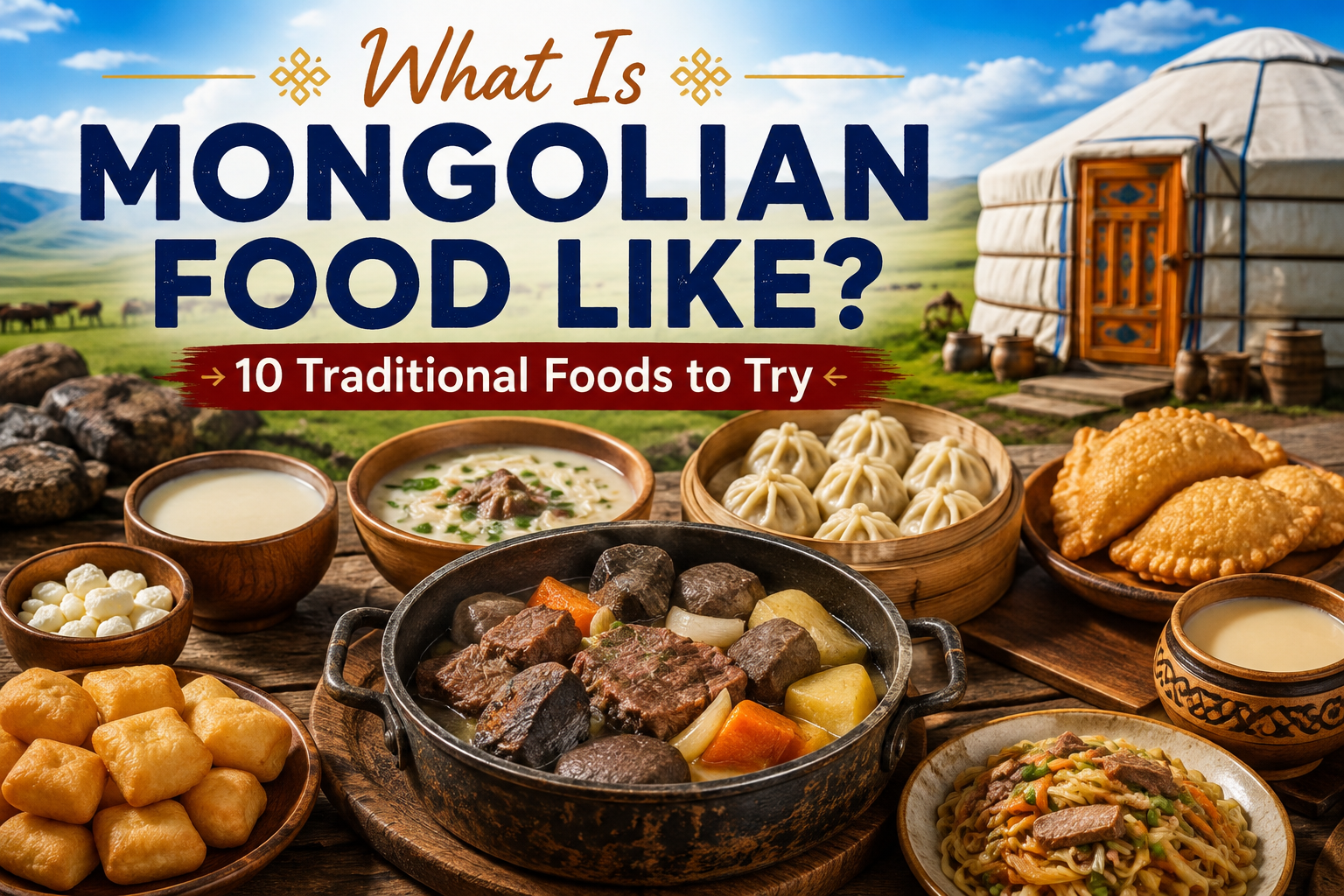
What Is Mongolian Food Like? – 10 Traditional Foods to Try
Mongolian food is closely connected to the country’s history, climate, and nomadic way of life.
For centuries, Mongolian families have lived in a land of vast grasslands, cold winters, and long distances between settlements. Livestock such as sheep, goats, cattle, horses, and camels have therefore played an important role in everyday life.
As a result, traditional Mongolian cuisine is known for meat, dairy products, handmade noodles, dumplings, and simple but filling dishes.
If you are planning your first trip to Mongolia, trying local food is one of the best ways to experience the country’s culture.
Here are 10 traditional Mongolian foods and drinks worth trying during your trip.
1. Khorkhog – Mongolian Stone-Cooked Barbecue
Khorkhog is one of Mongolia’s most famous traditional meat dishes and a memorable food experience for many visitors.
Meat, usually mutton, is cooked together with hot stones inside a sealed metal container. Vegetables such as potatoes and carrots may also be added.
The heated stones cook the meat from inside the container, creating tender and flavorful meat.
Khorkhog is often prepared for groups, celebrations, family gatherings, and special occasions rather than as an everyday meal.
For travelers, sharing freshly prepared khorkhog in the countryside can become one of the highlights of a Mongolia trip.

2. Buuz – Mongolian Steamed Dumplings
Buuz are steamed dumplings filled mainly with seasoned minced meat, usually mutton or beef.
They are one of the most recognizable Mongolian foods and can be found throughout the country.
Buuz are particularly important during Tsagaan Sar, the Mongolian Lunar New Year, when families may prepare large quantities for visiting relatives and guests.
They are simple, filling, and an excellent introduction to Mongolian cuisine for first-time visitors.

3. Khuushuur – Crispy Fried Meat Pastries
If buuz are steamed, khuushuur are their crispy fried relatives.
Khuushuur are made by placing seasoned minced meat inside flattened dough, sealing it, and frying it until golden.
They are especially associated with summer festivals and Naadam, Mongolia’s famous national festival.
Freshly cooked khuushuur is crispy on the outside and juicy on the inside.
It is also one of the easiest traditional Mongolian foods to find while traveling

4. Tsuivan – Mongolian Noodles with Meat and Vegetables
Tsuivan is a popular everyday Mongolian dish made with handmade or cut noodles, meat, and vegetables.
Common ingredients include mutton or beef, onions, carrots, cabbage, and potatoes, although recipes vary between households.
Unlike foods associated mainly with festivals or celebrations, tsuivan is a dish you may encounter as part of an ordinary family meal.
For travelers who want to try something that reflects everyday Mongolian home cooking, tsuivan is a good choice.

5. Bansh – Small Mongolian Dumplings
Bansh are smaller dumplings that resemble miniature versions of buuz.
They can be boiled and served on their own or added to soups and other dishes.
One traditional variation combines small meat dumplings with milk tea, creating a dish that may be quite different from anything first-time visitors have tried before.
Bansh are another example of how dough and meat have become important elements of traditional Mongolian cooking.
6. Guriltai Shul – Mongolian Noodle Soup
Guriltai shul is a simple and comforting noodle soup.
It is typically prepared with meat, broth, vegetables, and noodles.
The dish may appear basic compared with heavily spiced cuisines, but that simplicity reflects the traditional ingredients and practical cooking style of Mongolia.
A warm bowl of noodle soup can be particularly enjoyable after a long day traveling through the countryside or during Mongolia’s cooler weather.

7. Airag – Traditional Fermented Mare’s Milk
Airag is one of Mongolia’s most distinctive traditional drinks.
It is made from fermented mare’s milk and has a slightly sour taste with natural alcohol produced during fermentation.
Airag has strong cultural associations with summer, rural life, and Naadam.
Travelers visiting a family that produces airag may have an opportunity to taste it.
The flavor can be surprising for first-time visitors, but trying a small amount can be an interesting cultural experience.
8. Aaruul – Dried Mongolian Dairy Curds
Aaruul is a traditional dried dairy product that comes in many shapes, sizes, and levels of hardness.
Depending on how it is prepared, the flavor can range from mildly milky to noticeably sour.
Drying dairy products allowed nomadic families to preserve food for longer periods, making aaruul particularly suitable for a mobile lifestyle.
You may see aaruul offered to guests in a ger or sold in markets and local shops
9. Suutei Tsai – Mongolian Milk Tea
Suutei tsai is traditional Mongolian milk tea and is an everyday drink in many households.
Unlike sweet milk tea found in some countries, Mongolian milk tea is generally mild and may contain a small amount of salt.
It is commonly offered to guests and is closely connected with everyday hospitality.
If you visit a local or nomadic family during your Mongolia trip, there is a good chance that a bowl or cup of suutei tsai will be one of the first things you are offered.
10. Boortsog – Traditional Fried Dough
Boortsog is a traditional fried dough snack.
It can be served with tea, dairy products, cream, or other accompaniments and is commonly associated with family gatherings and traditional occasions.
Recipes and shapes vary, so you may encounter different versions during your travels.
For visitors, boortsog is an easy traditional snack to try alongside Mongolian milk tea.
Is Mongolian Food Spicy?
Traditional Mongolian food is generally not very spicy.
Rather than relying heavily on chili or strong spices, many traditional dishes emphasize the flavor of meat, broth, dairy products, onions, and simple seasonings.
Travelers accustomed to strongly seasoned food may initially find some Mongolian dishes mild.
However, modern restaurants in Ulaanbaatar offer a much wider variety of flavors and cuisines.
What Can Travelers With Dietary Restrictions Expect?
Food options are much broader in Ulaanbaatar than in remote areas of Mongolia.
In the capital, travelers can find Mongolian restaurants as well as Korean, Japanese, Chinese, Indian, European, and other international cuisines.
In rural areas and ger camps, meal choices can be more limited.
If you are vegetarian, vegan, have food allergies, or follow another specific diet, it is best to inform your tour operator before the trip so arrangements can be made in advance.
Mongolian Food Is Part of the Travel Experience
Trying Mongolian food is about more than simply deciding what to eat for lunch or dinner.
Khorkhog reflects communal cooking traditions. Buuz connects with family celebrations. Airag and dairy products are closely linked with livestock and nomadic life. Suutei tsai reflects the everyday tradition of welcoming a guest.
Food can therefore help travelers understand why Mongolia’s cuisine developed the way it did.
During your journey, try a few unfamiliar dishes, share a meal with local people, and experience Mongolia through its food as well as its landscapes.
Recommended Mongolia Tours
Central Mongolia – 4 Nights / 5 Days
Gobi Desert & Terelj – 5 Nights / 6 Days
Khuvsgul Lake, Central & Northern Mongolia – 6 Nights / 7 Days